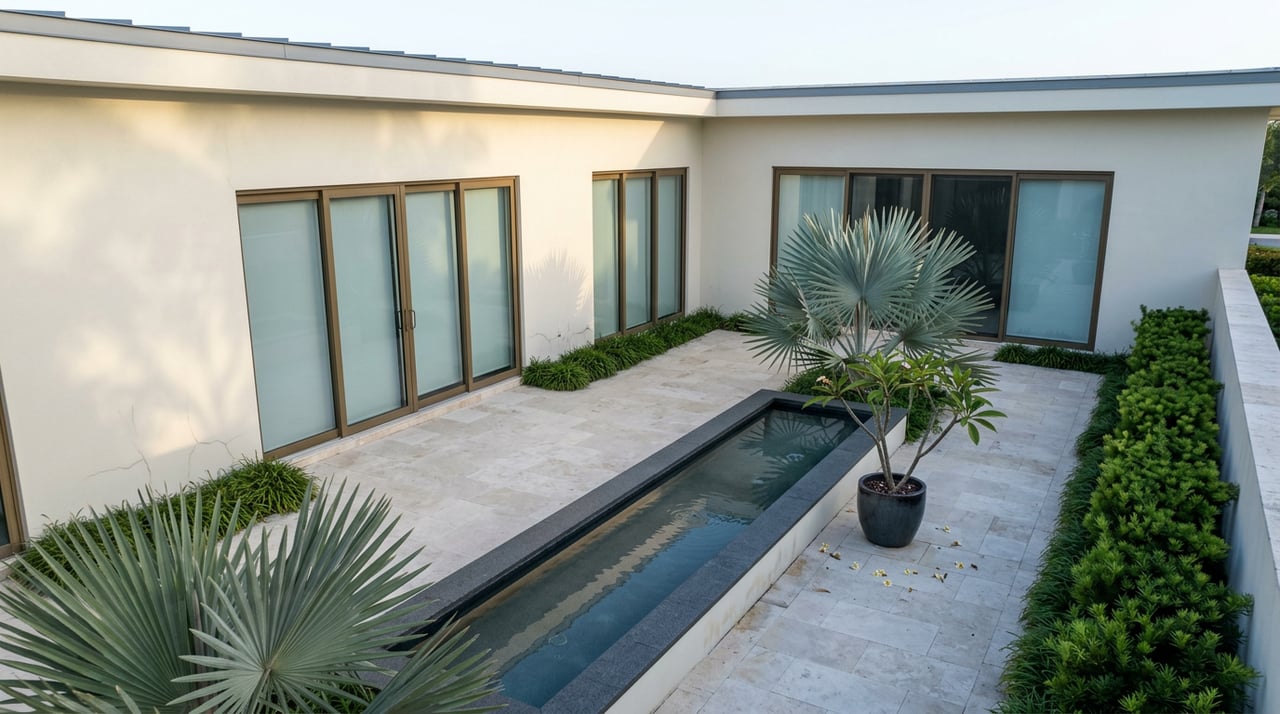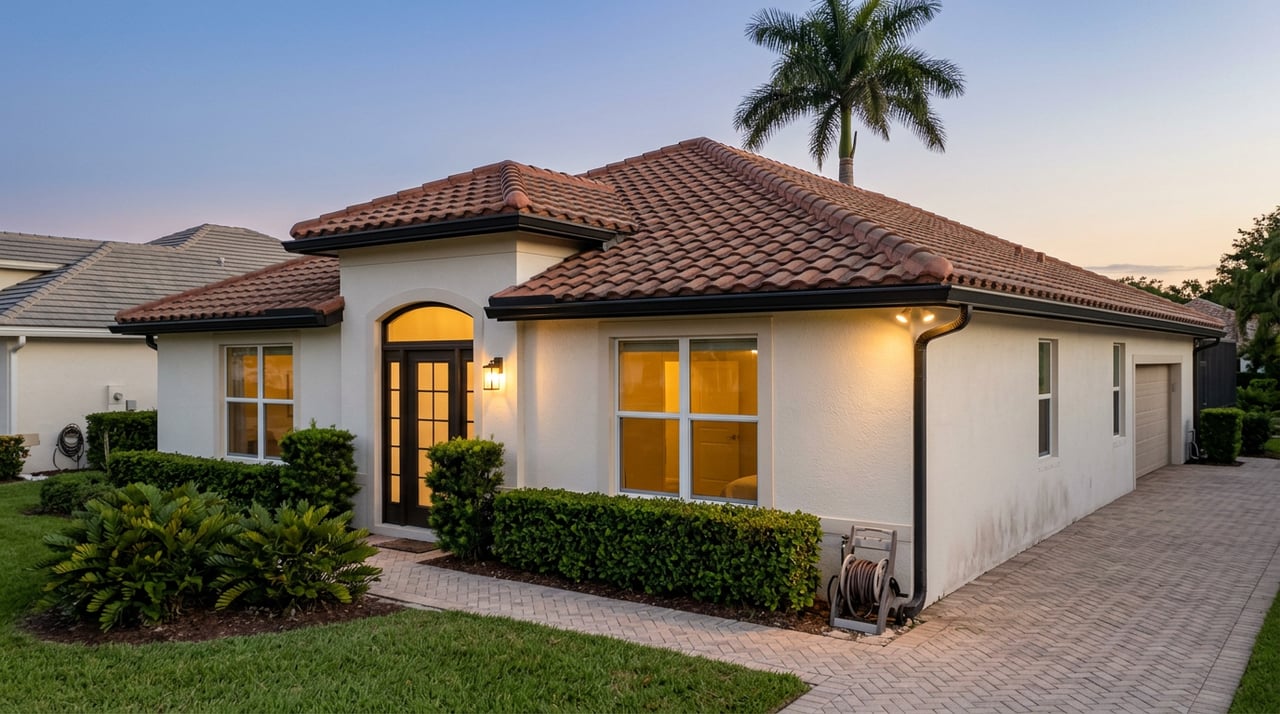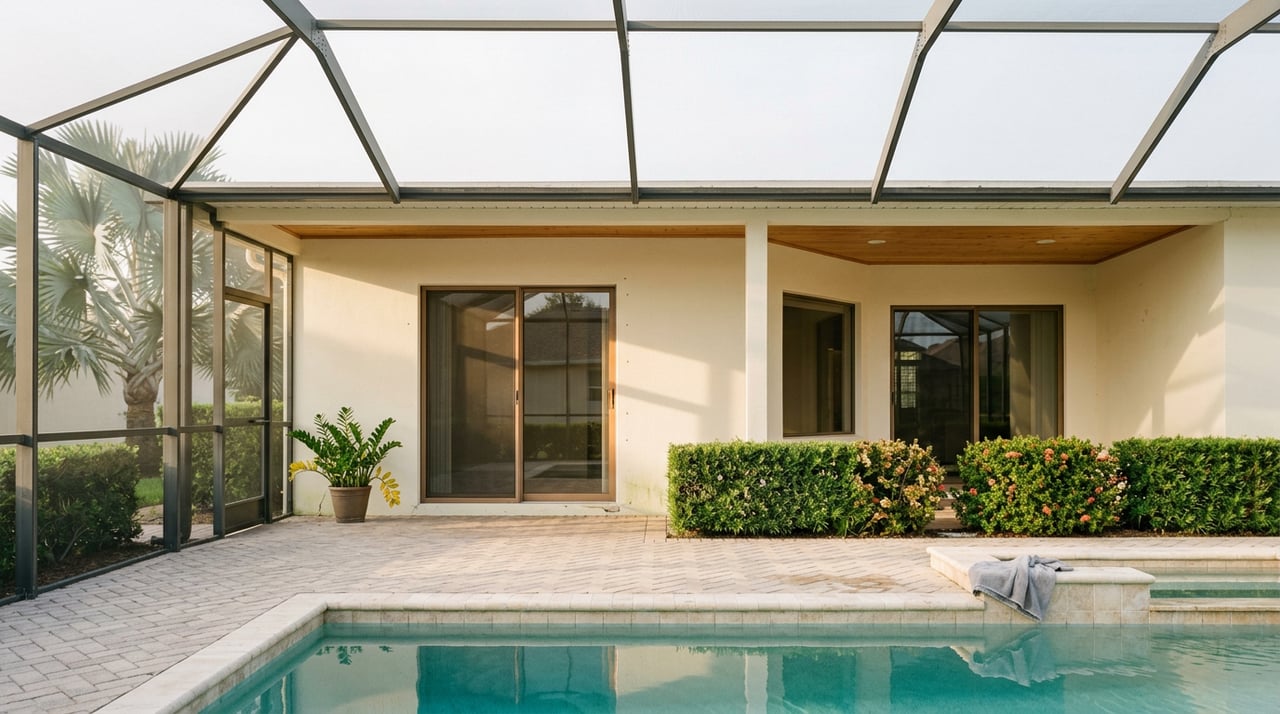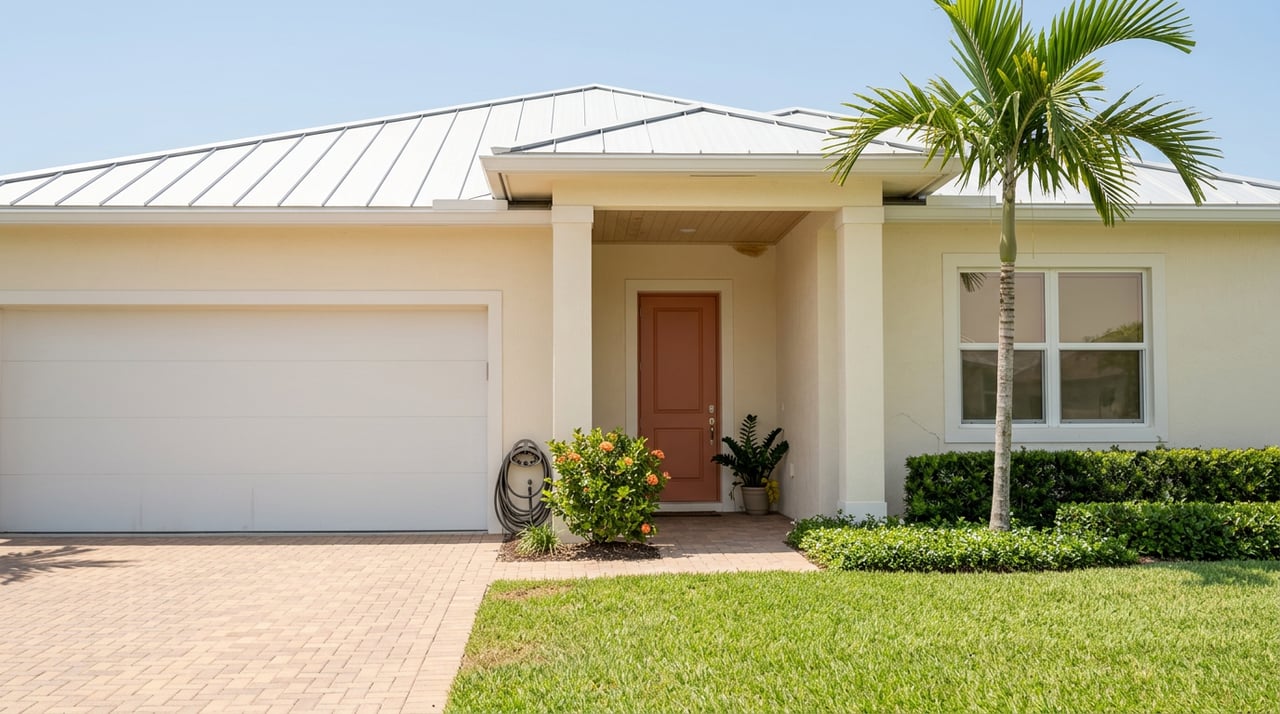
This summer, Del Webb quietly stopped selling new homes at Cypress Falls, its 710-home community for residents 55 and older in North Port's Woodlands area. The builder's own site now sends new-construction shoppers a few streets over to its sister community, Arbor Oaks, instead. For someone scrolling listings, that looks like a footnote. For anyone actually doing the math on a North Port purchase right now, it's the detail that changes the whole conversation.
North Port runs on two different sets of rules, and which one applies to a given home has almost nothing to do with the number on the sign. It depends on whether a builder is still standing behind that home or has already walked away.
Two North Ports Inside One Zip Code
North Port's population grew from roughly 75,000 residents in 2020 to more than 90,000 by 2026, and the city's builders have spent that stretch racing to keep pace. That growth produced two housing markets layered over the same city limits, and a relocation buyer comparing prices across North Port is usually comparing across both without realizing it.
One market is still under construction. D.R. Horton is selling at Central Parc from the $270,000s, Pulte is building the 55-plus community at Arbor Oaks, Centex is filling in family floor plans at Cedar Grove, and Lennar has lots moving with no HOA at all on Peachland Boulevard. In every one of these communities, the seller is a builder competing for your business, and that competition shows up as financing incentives that never appear on the listing price.
The other market is finished. Cypress Falls is the cleanest example: every home sold, the builder gone, every future sale now a transaction between two private owners. Once a community crosses that line, the incentive structure doesn't disappear, it just changes hands, from a national builder's marketing budget to whatever an individual seller happens to be able to offer.
A buyer sizing up a Central Parc listing against a Cypress Falls listing using price per square foot alone is treating two different economies as if they were one.
What an Active Builder Is Still Willing to Pay For
While a community is still selling, the builder needs inventory to move, and that urgency turns into real, negotiable dollars. Builders currently active in North Port are offering closing cost assistance, rate buydowns, and upgrade packages that can add somewhere in the range of $15,000 to $30,000 in value to a purchase, according to a mid-2026 market outlook tracking the area.
That figure gets a lot more concrete attached to an actual home. One D.R. Horton listing in Central Parc walks through a specific example: a $352,990 home financed at 5 percent down with a promotional adjustable rate, landing at a $2,252 total monthly payment that folds in principal, interest, taxes, mortgage insurance, homeowners insurance, and HOA dues. That's the builder doing the payment math in public, because the incentive package is as much a part of what they're selling as the house itself.
Carrying costs vary by community too, and they belong in the comparison right alongside the incentive. Central Parc's HOA runs $215 a month and covers gated community upkeep. Arbor Oaks, the community Del Webb now steers buyers toward, runs $306 to $322 a month for a fuller amenity package built around fitness, pickleball, and a clubhouse. Lennar's homes on Peachland Boulevard carry no HOA at all.
None of this exists once the builder finishes selling out a community. The incentive lives in the sales office, not in the property.
What Happens When the Builder Leaves
Cypress Falls tells the other half of the story. With no builder left to offer a rate buydown, individual sellers there are negotiating on something builders can't touch: the loan itself. Several current listings in the community advertise assumable VA loans carrying rates between 2.25 and 2.875 percent, and a buyer does not have to be a veteran to assume one.
Set that against where financing sits today. As of Bankrate's August 22, 2026 survey, the average 30-year fixed rate in Florida is running in the mid-to-high 6 percent range. The gap between an assumable loan under 3 percent and a new loan near 6.75 percent isn't a rounding error. Run the numbers on a $300,000 loan balance and the difference in principal and interest alone comes out to roughly $750 a month, money that goes toward equity instead of a lender's spread.
Cypress Falls carries its own fixed costs. HOA dues run $820 to $852 a quarter, and a CDD assessment adds another $907 to $1,438 a year through the property tax bill. Those numbers are set and disclosed. An assumable rate is a lever a buyer can actually pull, and it only exists in the first place because the builder is out of the picture.
Running the Comparison the Way It Actually Works
| Still building (example: Central Parc) | Sold out (Cypress Falls) | |
|---|---|---|
| Who sets the price | Builder | Individual seller |
| Financing lever | Builder rate buydown, closing cost credit | Assumable loan, when the seller has one |
| Monthly fees | HOA around $215/month | HOA $820 to $852/quarter plus CDD $907 to $1,438/year |
| Negotiating room | Builder incentive package | Price, terms, and loan assumption |
The table isn't a verdict on which side wins. It's a reminder that the two columns aren't playing the same game, which means the questions worth asking are different depending on which side of the table a listing falls on.
For a home still under construction, ask:
- What is the builder currently offering on this specific home, not just the community as a whole?
- Does the incentive require financing through the builder's preferred lender?
- How much of the advertised $15,000 to $30,000 range actually applies here?
For a resale in a sold-out community, ask:
- Does this listing carry an assumable mortgage, and what type?
- What rate and remaining term does that loan carry?
- What would the seller need from a buyer to make the assumption work, and what would a lender require to qualify you for it?
The Number That Actually Belongs on Your Spreadsheet
Every North Port listing eventually gets reduced to one number in a buyer's head: the list price. It's the least useful figure in the entire transaction. What actually determines what a home costs you each month is principal and interest at whatever rate applies to that specific loan, plus HOA, plus CDD if there is one, plus insurance and taxes, compared against the same math on the next home on your list.
A $270,000 new construction home with a builder-bought-down rate can land at a lower monthly payment than a $250,000 resale financed at today's market rate. A resale carrying an assumable 2.5 percent loan can beat both of them on a home priced $20,000 higher. None of that shows up from scrolling list prices on a portal. It shows up when you ask the financing question before the price question, on every single home.
FAQ
Does every resale home in a sold-out community come with an assumable loan? No. Assumable loans exist only because a specific prior owner financed with VA, FHA, or USDA and the terms of that particular loan allow assumption. You have to ask listing by listing, since it won't hold true for every home in Cypress Falls or any other resale community.
Can someone who never served in the military assume a VA loan? Yes. VA loan assumability doesn't require military service from the new borrower, though that buyer still has to qualify with the lender, and the seller's VA entitlement can remain tied up until the loan is paid off or refinanced.
Is North Port's construction boom over? Not yet. Central Parc, Arbor Oaks, Cedar Grove, and the Peachland Boulevard lots are all still active as of mid-2026, and the pace of the city's population growth suggests more communities will eventually follow the path Cypress Falls already completed.
Comparing a builder's rate buydown against a stranger's assumable VA loan is not the kind of math most people want to do alone, and the right answer changes as rates move and inventory shifts community by community. If you're weighing new construction against resale in North Port, or trying to figure out what a specific listing's financing actually means for your monthly payment, Jill Baldwin can walk through the real numbers with you. Let's Connect.